
Annual Outboard Maintenance: What You Absolutely Need to Do Each Year
Story by John Park
December 8, 2025
By John Park – Owner/Operator of Swift Marine Yacht Management
Whether you run a center console, bay boat, or offshore sportfishing rig, your outboard engine is the single most important mechanical system on your vessel. We will run you through what needs to be done at each 100 hour / annual service (whichever comes first).
This guide breaks down the exact level of care you should give your outboard each year.
Why the 100-Hour (Annual) Service Matters
The 100-hour / annual service (whichever comes first) isn’t optional. It’s the baseline, and skipping items (or letting a mechanic skip them) is where most problems start.
If you get all of the following done once a year, your outboard will treat you well.
Full Annual Outboard Maintenance Checklist
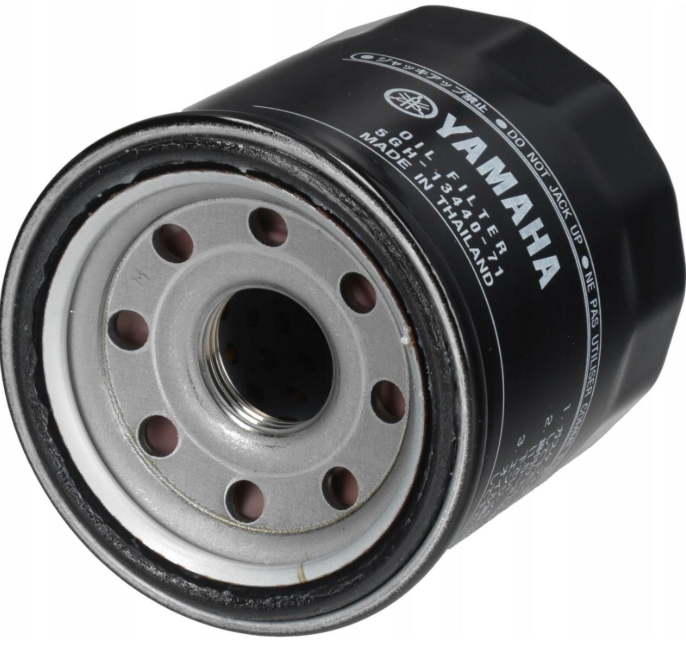
1. Engine Oil & Filter Change
Fresh oil is the lifeblood of your outboard. Each year:
- Replace engine oil
- Replace the oil filter
- Use OEM-approved oil
- Warm the engine before draining for a complete evacuation
Skipping this causes premature wear, higher temps, and reduced longevity.
2. Lower Unit Gear Oil (and Check for Metal or Water)
When you drain the lower unit, look for:
- Milky oil → water intrusion
- Metal shavings → gear wear or bearing failure
If you discover either, the unit needs immediate attention.
Replace gear oil annually using the correct viscosity for your engine.
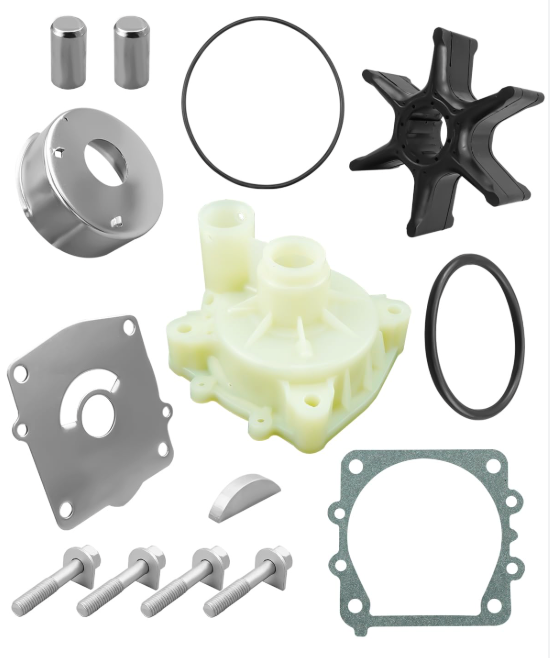
3. Replace the Water Pump Impeller (or Every 2 Years Minimum)
Impellers are cheap. Powerheads are not.
If you run in sandy, muddy, or shallow Charleston waterways, replace the impeller every single year. If you boat in cleaner water (South Florida canals or offshore), every 2 years is acceptable—but annual replacement is the safest.
Impelled failures are one of the top causes of:
- Overheating
- Power loss
- Engine alarms
- Blown powerheads
Don’t gamble—replace it annually if you use the boat often.
4. Thermostats & Poppet Valve Inspection
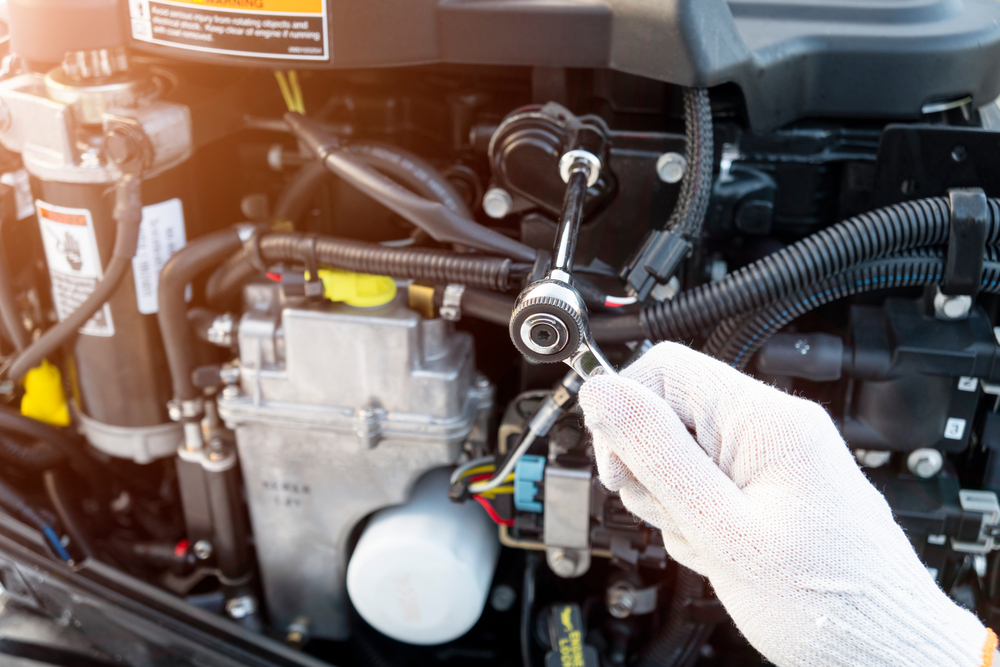
These small parts regulate cooling pressure and temperature.
Each year:
- Remove and inspect thermostats
- Check for salt buildup
- Clean or replace as needed
- Inspect the poppet valve for sticking or corrosion
Charleston and Florida waters destroy thermostats faster than you’d expect. Salt calcifies around them and ruins cooling efficiency.
5. Replace All Fuel Filters (Low-Pressure, High-Pressure, and VST Filter)
Fuel problems are the #1 cause of poor engine performance.
Every year:
- Replace the primary fuel/water separator
- Replace the engine-mounted fuel filter
- It is acceptable to check, clean, or replace the VST filter every 300 hours on outboard engines.
Symptoms of a clogged VST include:
- Bogging down
- Hesitation
- Loss of RPM
- Hard starts
- Stalling
6. Spark Plug Replacement
Saltwater + idling + short trips = fouled plugs.
Replace spark plugs yearly for:
- Stronger starts
- Better idle stability
- Improved fuel burn
- Proper ignition timing
7. Grease All Fittings, Steering, and Pivot Points
Salt dries out lubrication quickly.
Annually:
- Grease steering pivot points
- Grease tilt/trim points
- Grease prop shaft splines
- Grease all Zerk fittings
This prevents corrosion that can seize steering and tilt mechanisms.
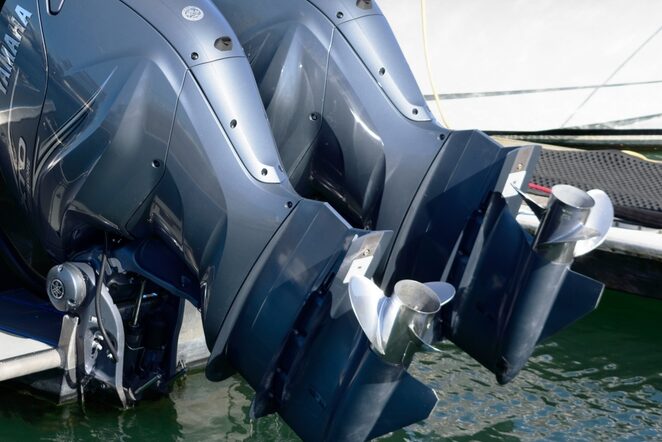
8. Remove the Prop & Inspect the Shaft
Marine growth, fishing line, and sand can damage seals.
Do this each year:
- Remove prop
- Inspect for fishing line wrapped around shaft
- Check prop shaft seals
- Apply new marine grease
- Reinstall prop
Fishing line can quietly destroy lower unit seals—and many owners never notice until it’s too late.
9. Clean and Protect Electrical Connections
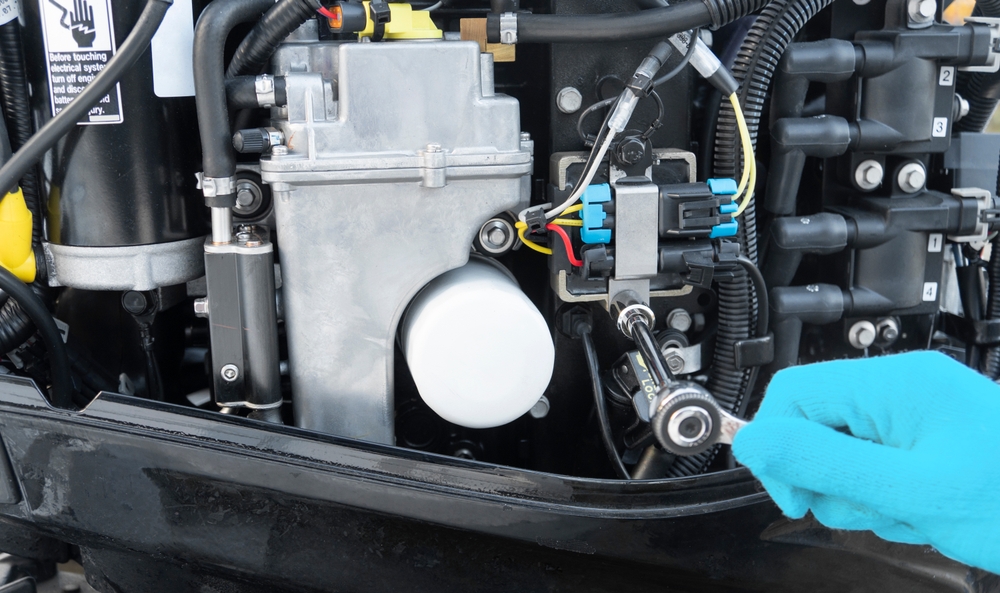
Salt kills electronics fast.
Annually:
- Remove cowling
- Inspect for salt residue
- Clean electrical grounds
- Check battery cables
- Use dielectric grease where appropriate
Good voltage = good engine performance.
10. Check Battery Health and Replace Every 2–3 Years
Modern outboards rely heavily on stable voltage.
Do this annually:
- Load test battery
- Clean terminals
- Check cables for corrosion
- Ensure the battery compartment is dry and ventilated
Replace batteries proactively—NOT when they fail.
11. Full Cooling System Flush (With Salt Treatment)
A simple freshwater flush isn’t enough.
Each year:
- Flush the engine for 10–15 minutes on muffs
- Use a salt-removal treatment to dissolve internal salt buildup
- Inspect for strong, consistent tell-tale stream
Water passages salt up slowly over time—this prevents it.
12. Check Anodes (Internal & External)
Anodes protect your engine from electrolysis.
Annually:
- Inspect external trim-tab zincs
- Inspect prop shaft anodes
- Check internal engine anodes (if equipped)
Replace whenever they’re 50% consumed.
Bonus: Items Every Boater Should Check Monthly
Here’s the “above-and-beyond” care that extends engine life:
- Monthly fuel stabilizer
- Monthly battery terminal cleaning
- Monthly visual inspection under cowling
- Frequent long runs (avoid constant idling)
- Never let ethanol fuel sit in tank
- Use high-quality marine soap that won’t strip wax/ceramic
This is the maintenance mindset that keeps engines reliable for thousands of hours.
Good Engines Last, Great Engines Are Maintained
Most outboard problems come from neglect, not from the engine itself. If you simply perform the annual items listed above, you will avoid 95% of the failures we see in Charleston and South Florida.
Whether you do the work yourself or hire a technician, use this guide as your checklist. If something gets skipped, your engine will pay for it later.
Request a Quote
Looking for professional yacht services? Contact our team to discuss your vessel’s needs and request a quote.
Contact Our Office